
Last updated November 16, 2026
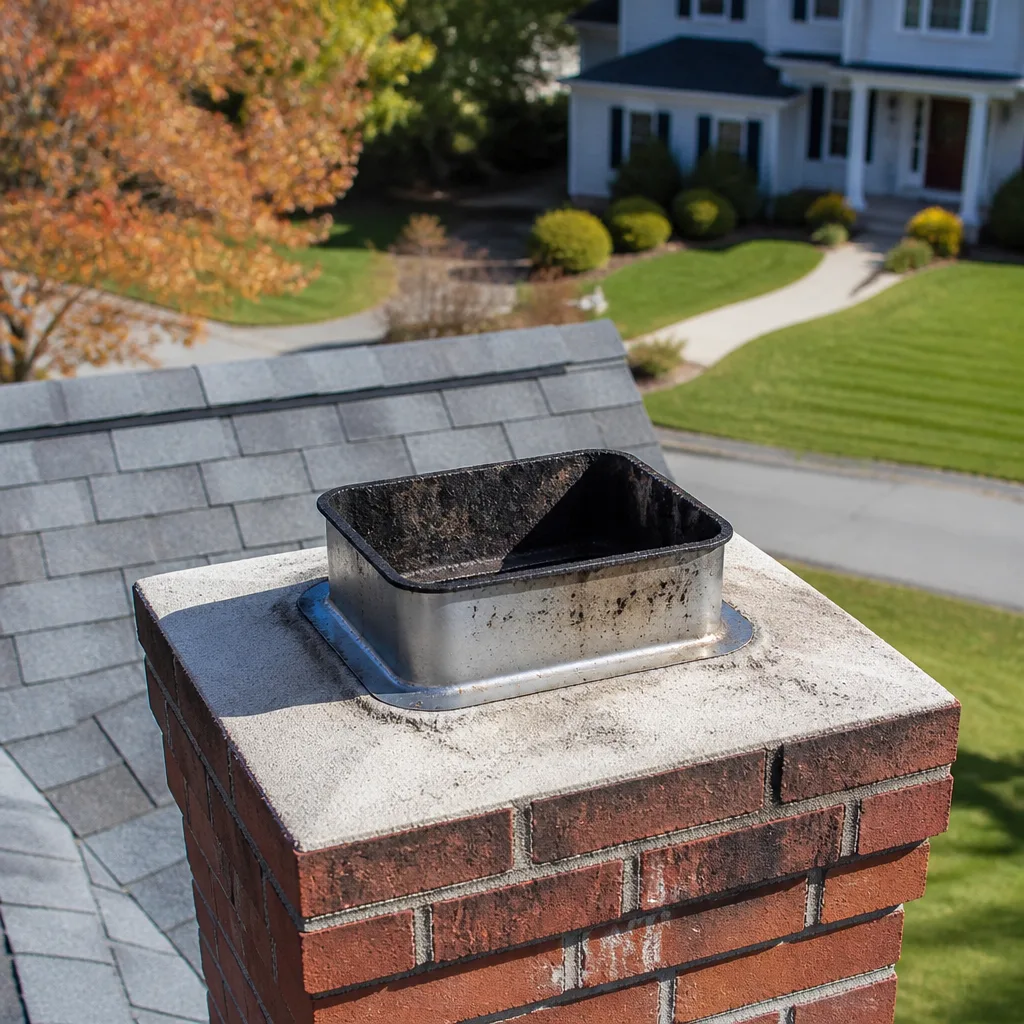 Sweep & inspection
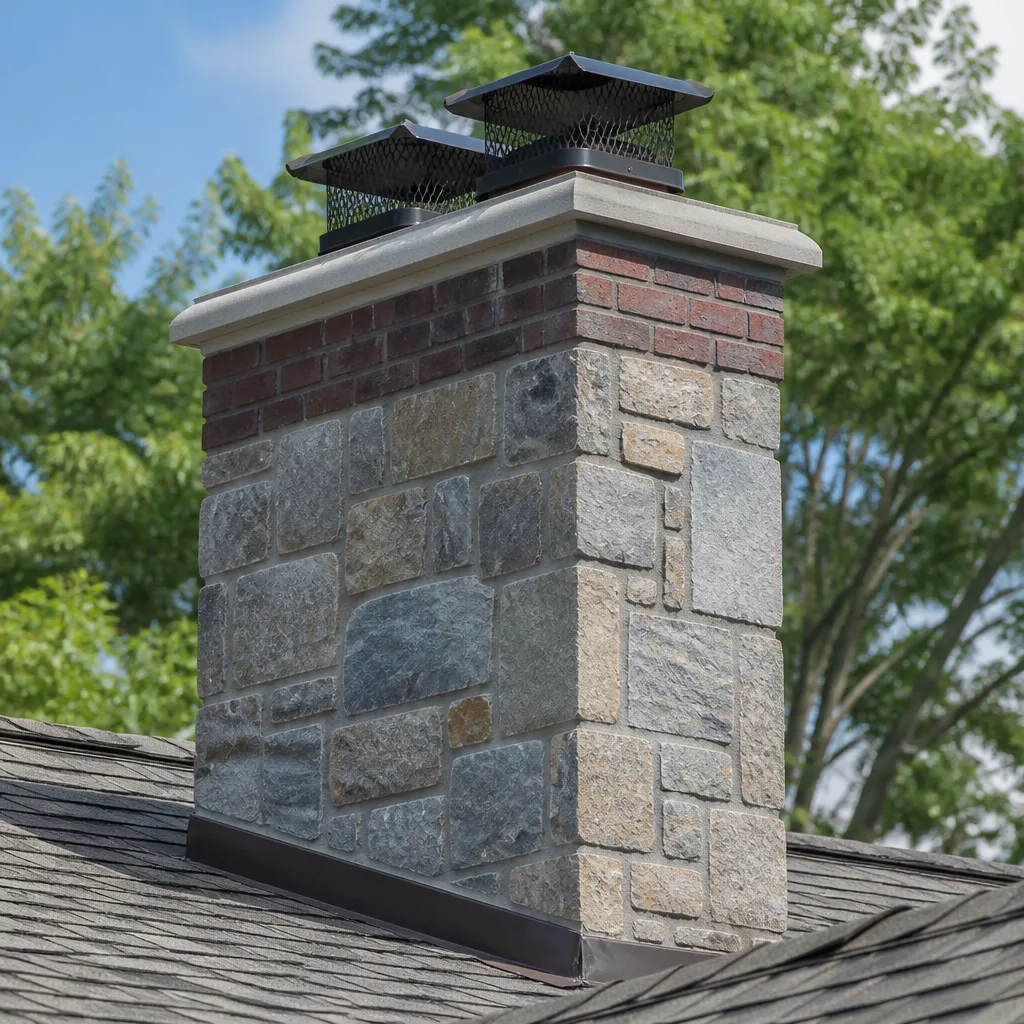 Caps & crowns
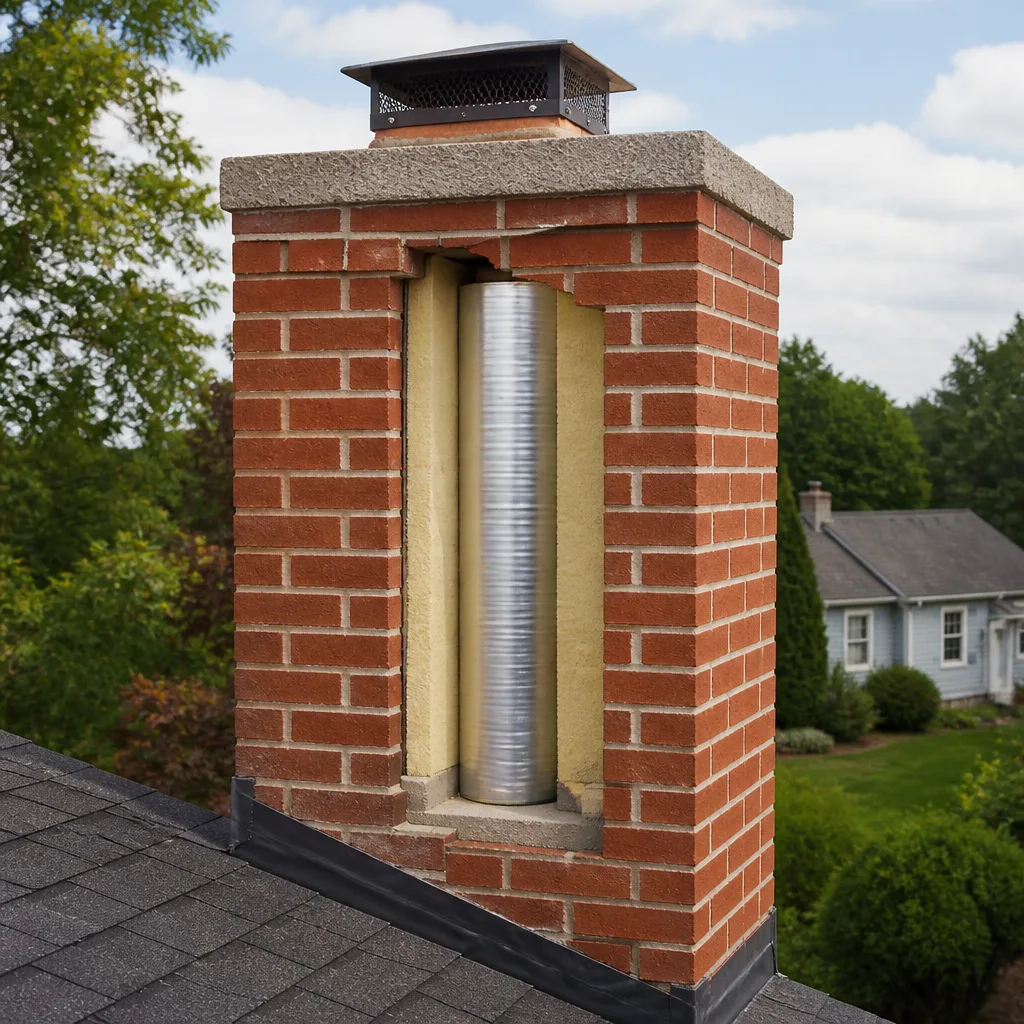 Flue relining
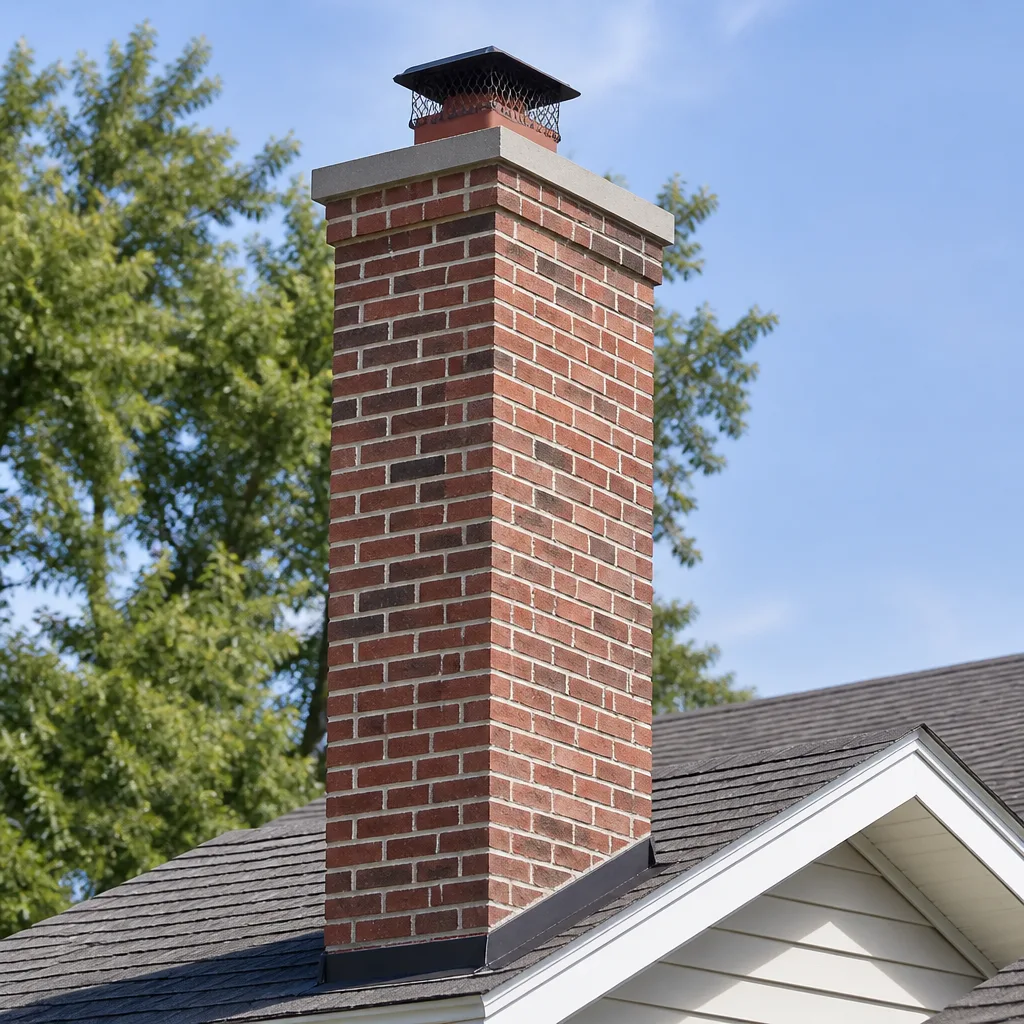 Masonry repair
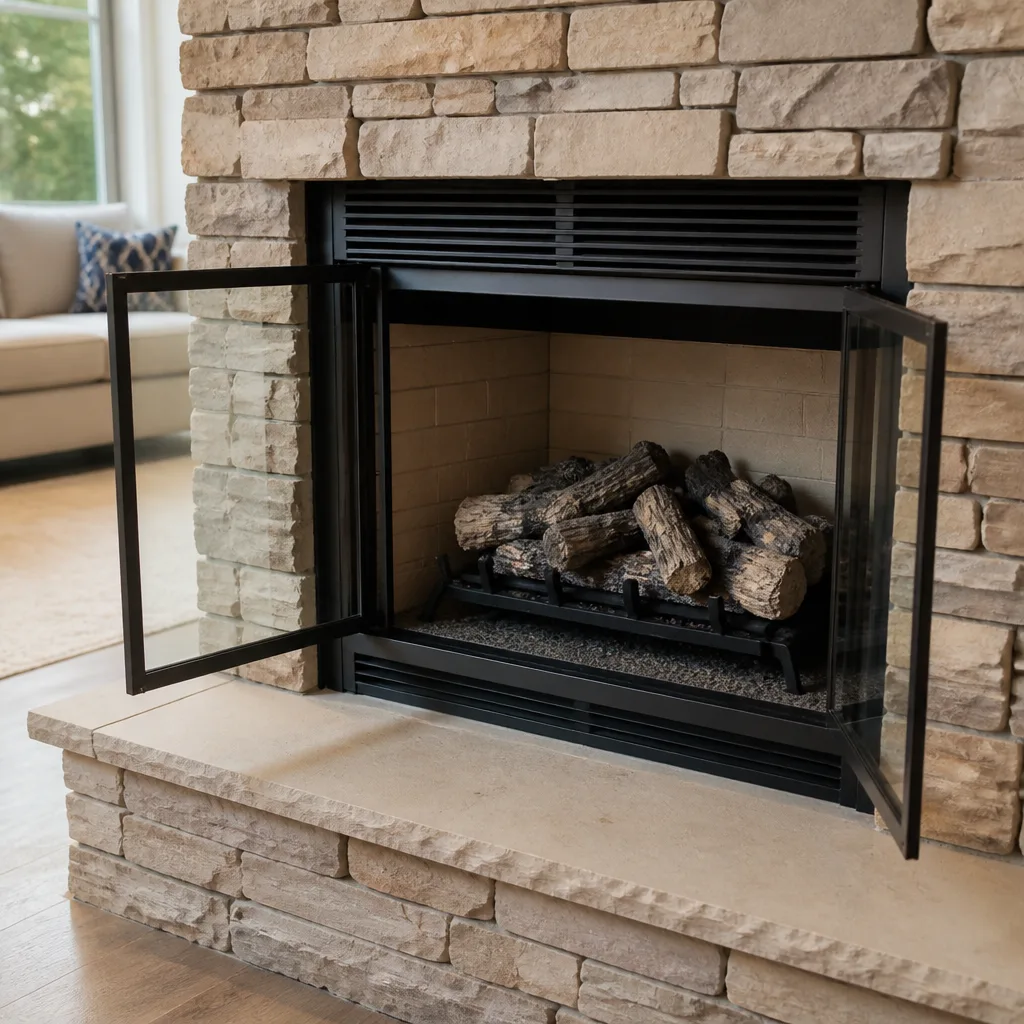 Gas fireplace service
Level 1 sweep and inspection to the NFPA 211 annual standard - flue, crown, cap, and flashing checked and photographed
Chimney sweep logs do not sweep chimneys. They loosen some creosote - which then falls where a brush and vacuum still have to collect it.
The Complete Guide to Chimney Cleaning in Colorado Springs
At elevation, wood burns less completely – not because of the wood, but because there’s less oxygen to finish the job. That incomplete combustion deposits creosote in Colorado Springs chimneys faster than the same fireplace would at sea level, and most homeowners have never been told this. Colorado Springs sits at 6,035 feet above sea level, where the air is thinner, the combustion cycle is different, and the cleaning schedule you read about in a national guide simply doesn’t apply. This guide explains what a complete chimney cleaning actually means in Colorado Springs, how to tell a real cleaning from a brush-and-go, and what to verify before you pay for one.
Quick Answer
A complete chimney cleaning in Colorado Springs means brushing the flue and then addressing the firebox, smoke chamber, damper, and cap – because high-elevation combustion, pine-heavy fuel, and Front Range wind load all change what builds up and where. Most Colorado Springs homes that burn through a full heating season need more than a flue brush pass. Following a cleaning, a Level 1, 2, or 3 inspection determines whether the liner, crown, or smoke chamber needs attention and whether the work can be handled by a full-service chimney company.
Styles & brands we work with
- Sweep & inspection
- Caps & crowns
- Flue relining
- Masonry repair
- Gas fireplace service
Table of Contents
- Why Colorado Springs Elevation Changes What “Clean” Means
- Pine, Softwoods, and Creosote in the Pikes Peak Region
- Level 1, 2, and 3: Which Scope Your Home Needs
- What a Complete Cleaning Actually Includes
- How to Verify a Chimney Was Actually Cleaned
- Front Range Wind, Crown Wear, and Water Intrusion
- Why Full-Service Beats a Sweep-Only Visit
- When to Call a Professional
Why Colorado Springs Elevation Changes What “Clean” Means
Combustion is chemistry with an oxygen budget. At sea level, a fire has a full supply of oxygen to finish burning the volatile gases wood releases. At 6,035 feet, each breath of air – and each pull of draft through your flue – contains less oxygen. The fire still burns, but it burns incompletely, and the unburned gases cool as they rise and condense on the flue wall as creosote.
This isn’t a knock on your firewood or your fireplace. It’s physics. The same load of wood that leaves a light glaze in a coastal chimney can leave a heavier, stickier deposit in a Colorado Springs chimney over the same number of fires. That deposit is what makes chimney cleaning in Colorado Springs a different job from the generic once-a-year brush pass homeowners read about online.
What elevation means for your schedule:
- Deposits build faster per cord burned, so a home that burns steadily through the heating season may accumulate a meaningful layer before a low-altitude cleaning schedule would call for one.
- Draft behaves differently. Thin air and Colorado Springs’ temperature swings affect how strongly the flue pulls, which changes where creosote lands – often higher in the flue than you’d expect.
- Dry climate, wet fuel risk. The arid Front Range dries wood fast on the surface, but split density matters more than surface feel. “Seasoned” wood from a local seller isn’t guaranteed dry through the middle.
None of this is meant to alarm. It’s meant to set an honest cleaning interval based on how you actually burn, not on a national average written for sea-level fireplaces.
Pine, Softwoods, and Creosote in the Pikes Peak Region
Pine and other softwoods are common fuel around the Pikes Peak region – they’re what grows here, what gets cleared, and often what gets sold. Softwoods carry more resin and burn hotter and faster than hardwoods, and that combination has a specific consequence: hotter flue gases that cool abruptly can leave a denser, more tar-like creosote than slow-burning hardwood does.
The old warning that “pine will burn your house down” is oversimplified, but it points at a real mechanism. Resin-rich wood, burned in thin air, at inconsistent temperatures, produces a deposit that’s harder to brush and more prone to glazing. Once creosote glazes – turns hard, shiny, and glassy – a standard flue brush skips over it rather than removing it. That’s a scope problem, not a frequency problem, and it’s exactly why the cleaning method matters as much as the cleaning schedule.
What we’d have you watch for after burning pine-heavy loads:
- A tar or asphalt smell when the fireplace is cold
- Flakes of black, shiny material at the top of the firebox
- Smoke rolling back into the room on startup despite a warm flue
- A visibly dark, uneven coating on the flue walls instead of a light dusting
If any of these show up, the cleaning scope needs to be reassessed before the next burn season. A chimney sweep that only brushes will miss glazed creosote entirely. Full-service work – including liner assessment and resurfacing with HeatShield where the flue wall has been compromised – addresses the deposit and the surface it formed on.
Level 1, 2, and 3: Which Scope Your Home Needs
The inspection levels are defined by the National Fire Protection Association, and they describe how deep the assessment goes – not how deep the cleaning goes. Many homeowners assume they need one or the other; in practice, cleaning and inspection are two separate decisions, and the right level depends on what’s changed since the last visit.
Level 1 Inspection
A visual assessment of the readily accessible portions of the chimney and venting system, without tools that require dismantling. This is the right baseline for a home with no known problems, no changes to the appliance, and a routine cleaning cycle. It answers: is anything visibly wrong?
Level 2 Inspection
A Level 2 adds a video camera scan of the flue interior, plus closer assessment of the accessible components and connections. It’s the appropriate level whenever the property is changing hands, an appliance has been replaced or upgraded, an event like a chimney fire or a flue collapse has occurred, or a Level 1 turned up something that needs a closer look. Most Colorado Springs homes moving through a sale or an appliance swap land here.
Level 3 Inspection
A Level 3 involves removing parts of the chimney or building assembly to access concealed areas when a serious hazard is suspected. It’s the least common and the most involved scope. If it’s being recommended, ask specifically what was observed that made it necessary.
Here’s what we’d want a Colorado Springs homeowner to know: after a full heating season of pine-heavy fuel at 6,035 feet, most homes are best served by a cleaning paired with at least a Level 2 camera scan. It’s the only way to see what a brush can’t reach and to know whether the liner needs attention before next winter.
What a Complete Cleaning Actually Includes
A complete chimney cleaning addresses the entire smoke path, from the fire where combustion starts to the cap where exhaust leaves the roof. The flue brush pass is one step of several – and in our experience, it’s the step many crews stop at. Here’s the full scope, in order:
- Firebox. Remove ash and debris, then assess the firebox walls and floor for spalling, cracks, or gaps in the refractory.
- Damper. Check the damper opens, closes, and seals fully, and clean the damper shelf where soot collects.
- Smoke chamber. This is the sloped masonry area just above the damper. It’s where soot and creosote settle fastest and where a flue-only sweep never reaches. Brushing and vacuuming the smoke chamber is the step that separates a real cleaning from a pass-through.
- Flue liner. Brush the full length of the flue with the right brush for the liner material, and use a HEPA-filtered vacuum at the firebox to contain the dust.
- Chimney cap and crown. Inspect the cap for blockage, the crown for cracking, and the flashing at the roof line for gaps that let water in.
- Exterior. A look at the masonry from the ground or the roof to catch cracking, spalling, or efflorescence that signals moisture intrusion.
If the flue walls are damaged or the liner is compromised, cleaning alone doesn’t restore them. That’s where a repair-capable company earns its keep. A DuraFlex flexible liner gives a damaged or non-compliant flue a permanent, code-appropriate liner; HeatShield resurfacing restores a degraded flue wall without a full reline. Found during inspection, fixed on the same call is the advantage of working with a company that carries the full scope under one roof.
How to Verify a Chimney Was Actually Cleaned
You’re not expected to climb on the roof – and you shouldn’t. But you can check the results from the ground and from a few key points before the technician leaves. A real cleaning leaves visible evidence in places a quick pass doesn’t touch.
A few things to check yourself:
- Run your hand along the firebox walls once the technician has finished. Soot smudging on your hand means the firebox wasn’t cleaned, only brushed above it.
- Shine a light up into the smoke chamber from the firebox opening. It should be visibly clean of soot and glossy deposits.
- Ask for camera footage of the flue interior. A Level 2 scan produces video you can see and keep. If a company can’t show you what’s inside your flue, that’s a conversation worth having before you pay.
- Look at the drop cloth. A proper cleaning contains dust with HEPA vacuuming and protective sheets. If your living room is dusted when the technician leaves, the containment wasn’t right.
- Ask for a written summary of what was found and what it means. Not a sales quote – a diagnostic write-up.
An honest inspection names what’s wrong, what can safely wait, and what needs a repair this season. Nothing gets recommended without evidence you can see for yourself. If a company can’t point to the specific deposit or defect on camera, the recommendation deserves a second question – and honestly, a second opinion.
Front Range Wind, Crown Wear, and Water Intrusion
Chimneys on the Front Range don’t just deal with combustion. They deal with wind. The sustained winds and gusts that Colorado Springs sees through the colder months put constant load on the chimney crown – the sloping concrete cap at the top of the masonry. A cracked crown lets water into the masonry, and once water is in, freeze-thaw cycles in a Colorado winter do the rest. Water is one of the most common paths to masonry damage and liner degradation on Pikes Peak-region homes.
What to look for after a windy season:
- Hairline cracks or chips in the crown at the top of the chimney
- Flaking or white staining on the brick exterior (efflorescence)
- Water staining on the ceiling or chimney breast inside the home
- Famco venting components or a cap that’s loose or misaligned
None of this is a cleaning problem, but it’s the kind of problem a cleaning visit is positioned to catch. A crown repair now prevents a masonry rebuild later, and it’s the sort of diagnostic step a sweep-only crew simply isn’t looking for. When we inspect a Colorado Springs chimney, the crown and flashing get a look on every visit, because the local wind makes them the weak point.
Why Full-Service Beats a Sweep-Only Visit
The real question isn’t whether to clean your chimney – it’s who to call when the cleaning turns up a problem. A sweep-only operation cleans, hands you a report, and refers you out. You then source a second contractor, explain the issue again, and wait for a separate appointment before the actual fix happens. Meanwhile the season moves on.
Olympus Chimney Sweep runs three services under one roof: cleaning, inspection, and repair. That means the diagnostic findings from a cleaning visit become the repair schedule without a referral gap. The product lines we work with reflect that repair depth – DuraFlex liner systems for damaged or undersized flues, HeatShield resurfacing for degraded flue walls, Gelco caps for chimney terminations, Famco venting components, and Copperfield supply-grade materials. These are professional-grade products, used by certified chimney technicians across the industry, and they’re the reason our repairs are permanent solutions rather than temporary patches.
Full-service scope matters most in a few specific scenarios:
- A cracked flue liner found during a Level 2 scan
- A spalling smoke chamber that needs HeatShield resurfacing
- An undersized or unlined flue that needs a DuraFlex liner before the appliance can run safely
- A crown failure that needs repair before the next freeze
Each of these is a repair a basic sweep crew can’t perform. Getting it done the same visit is peak-standard chimney care – a name we take seriously at Olympus, because it’s a commitment to the standard of work, not just a brand.
When to Call a Professional
Some cleaning can wait. Some shouldn’t. Call a professional – and honestly, call one this season – if any of the following applies:
- You’ve burned through a full heating season without a cleaning or inspection
- You burn pine or other softwoods regularly and notice a tar smell or glossy black deposits
- You’ve had a chimney fire, even a small one – the liner needs a Level 2 camera scan before you burn again
- You’re buying a home, replacing an appliance, or changing the venting setup
- You see cracking in the crown or water staining inside, or the cap is loose
- Smoke rolls back into the room on startup despite a warm flue
- The chimney has no liner or an unlined flue visible in the firebox
If any of these are true, don’t wait for the next heating season. Olympus Chimney Sweep offers free estimates in Colorado Springs – call (844) 560-6330. A cleaning plus a proper camera inspection tells you what you’re dealing with, and nothing gets recommended that you can’t see for yourself.
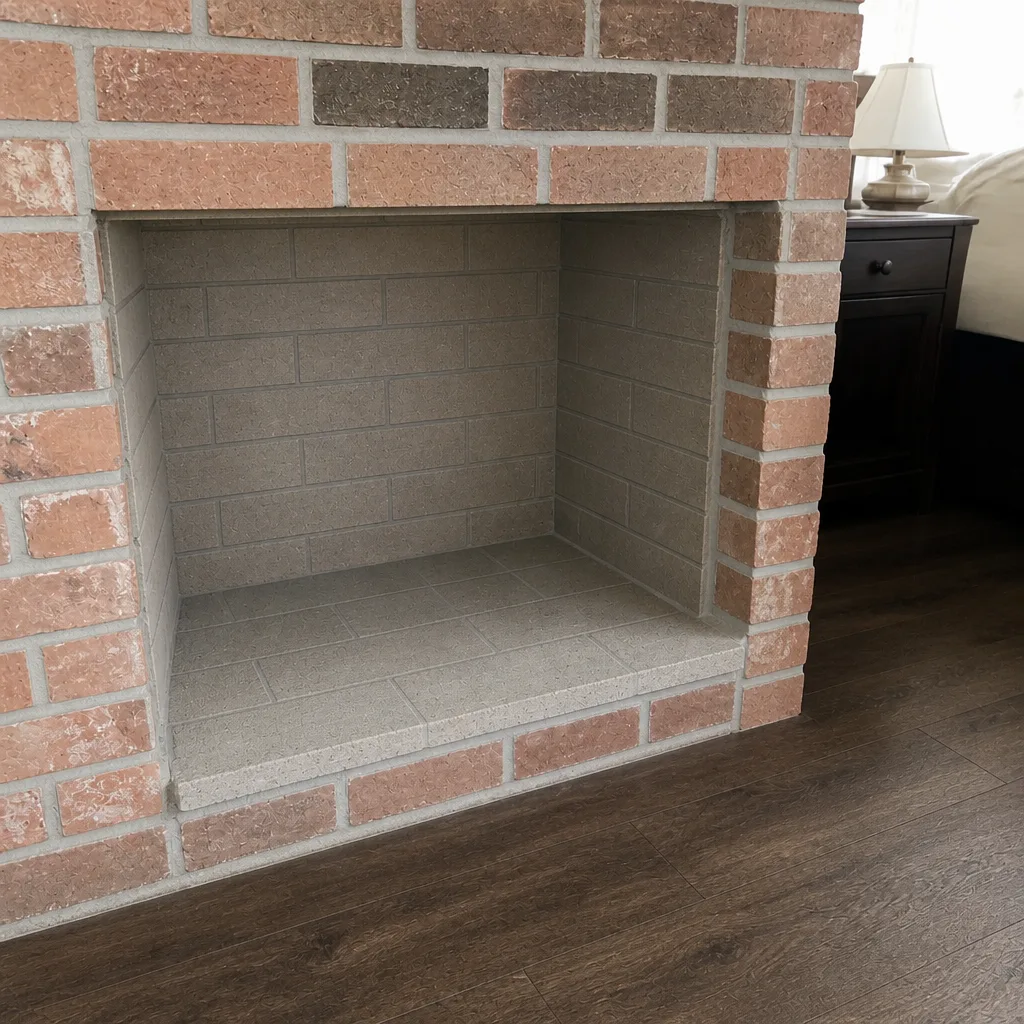
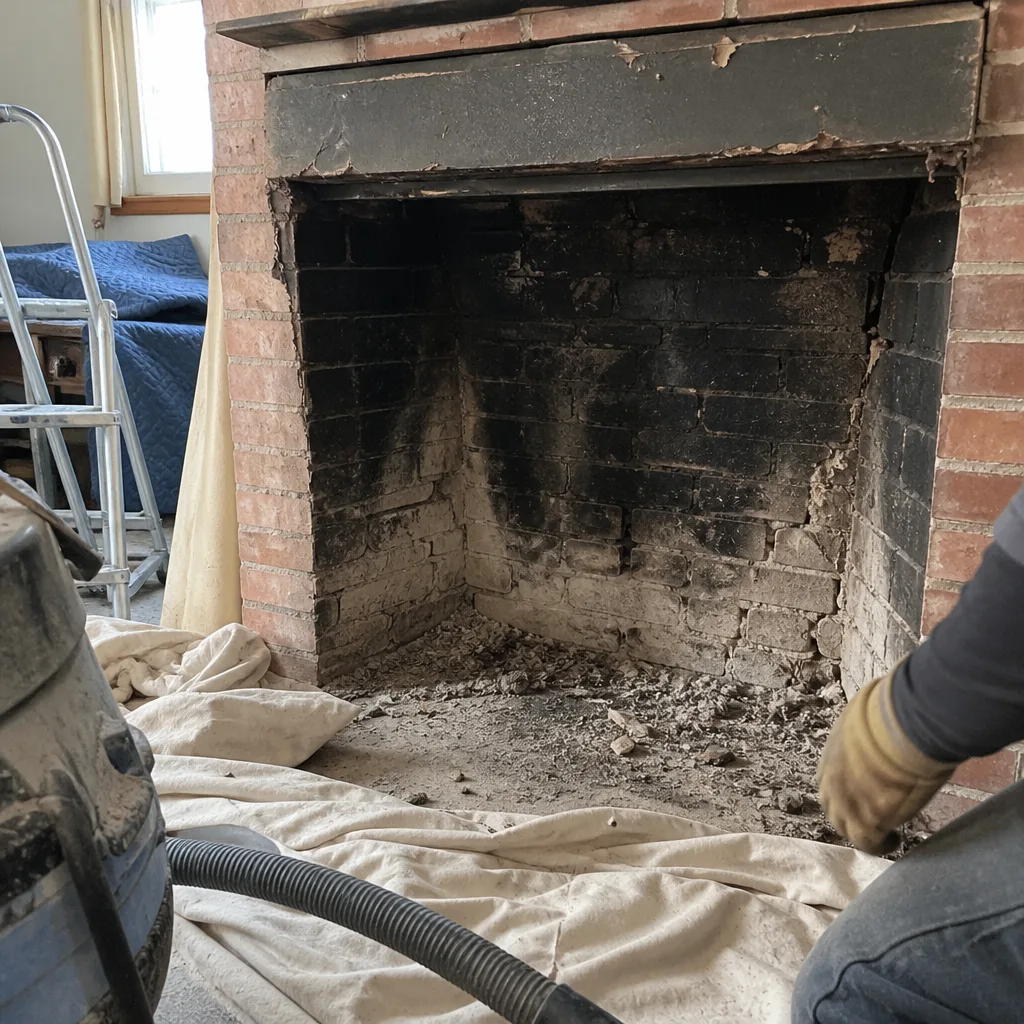
See the difference
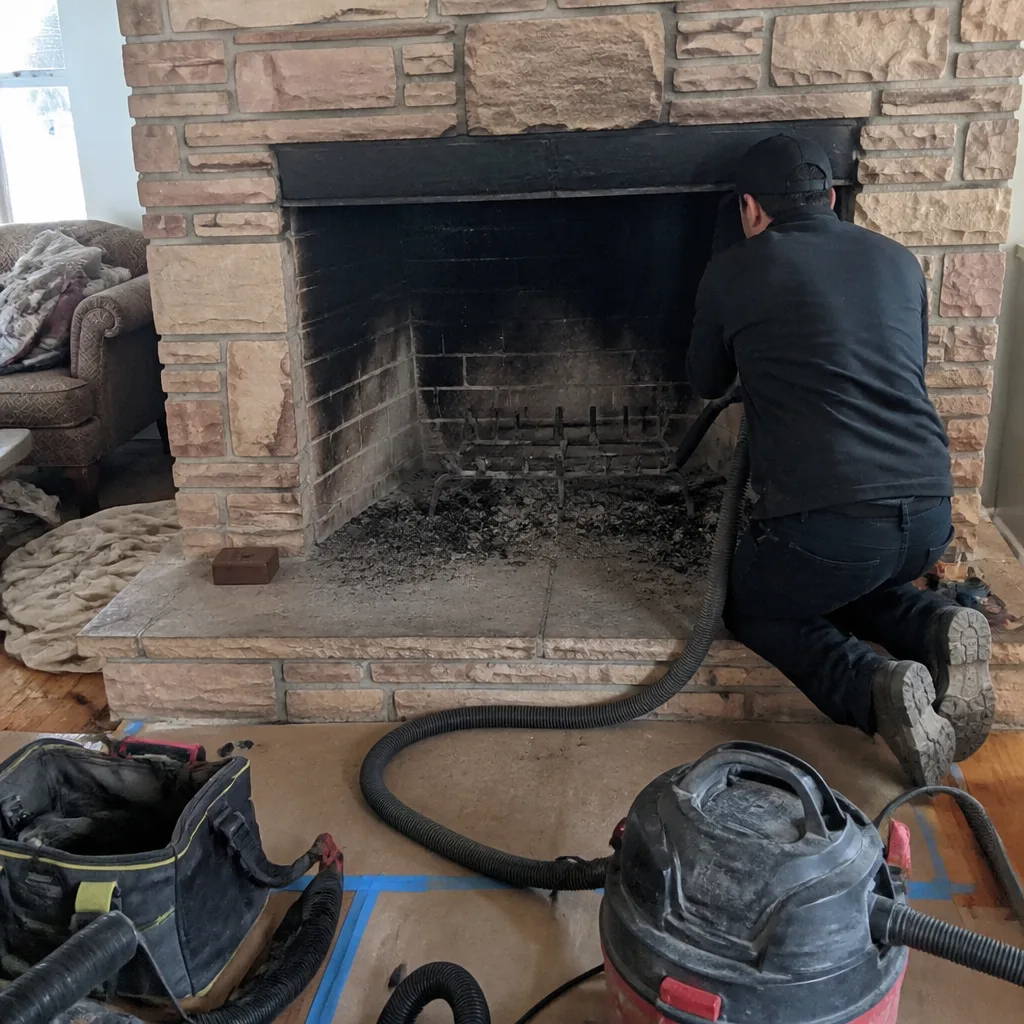 Before
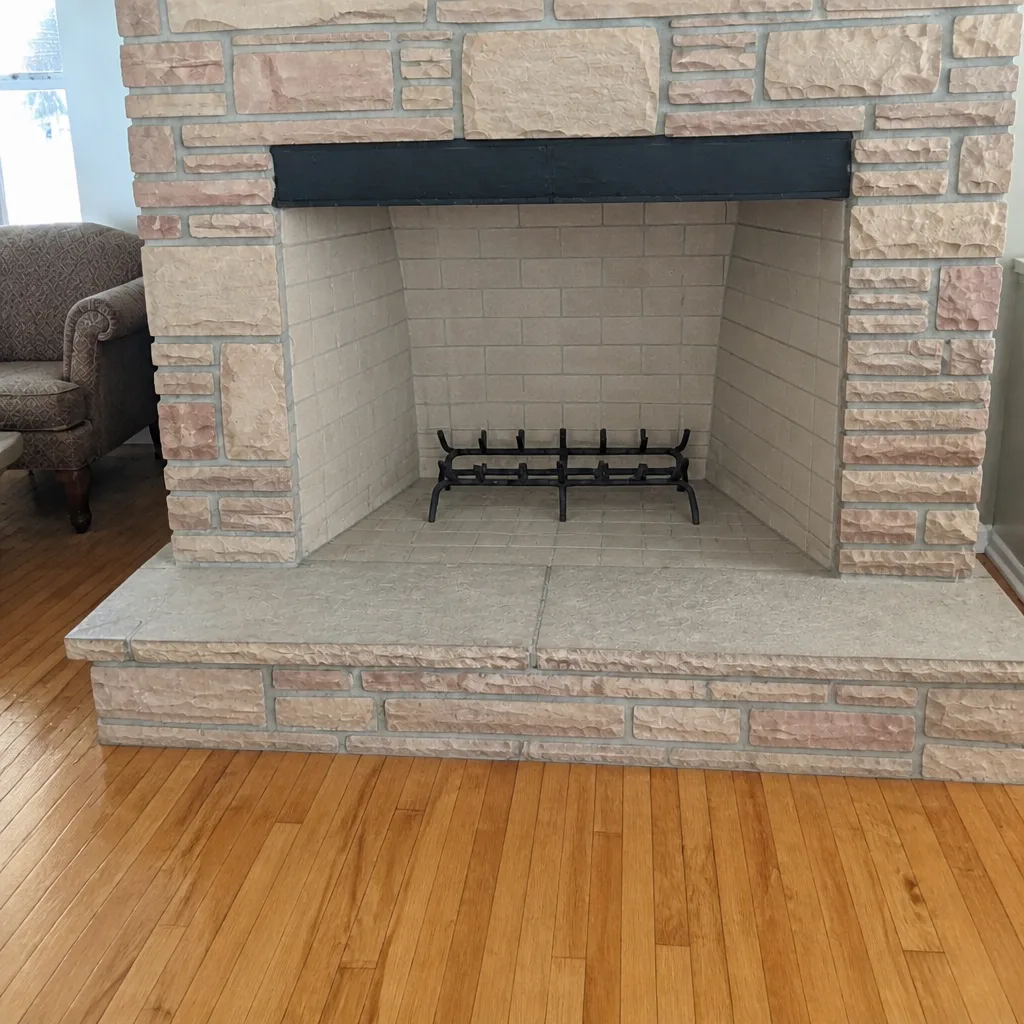 After
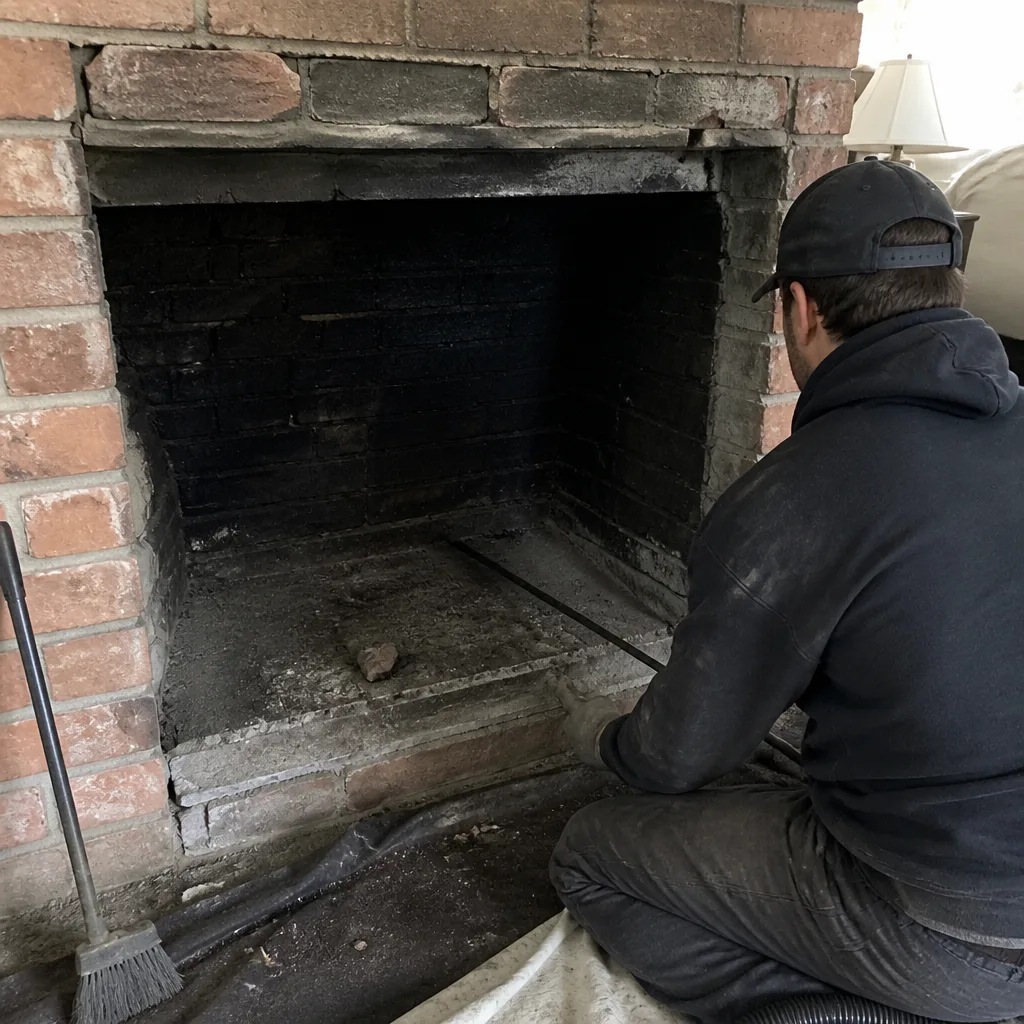 Before
 After
 Before
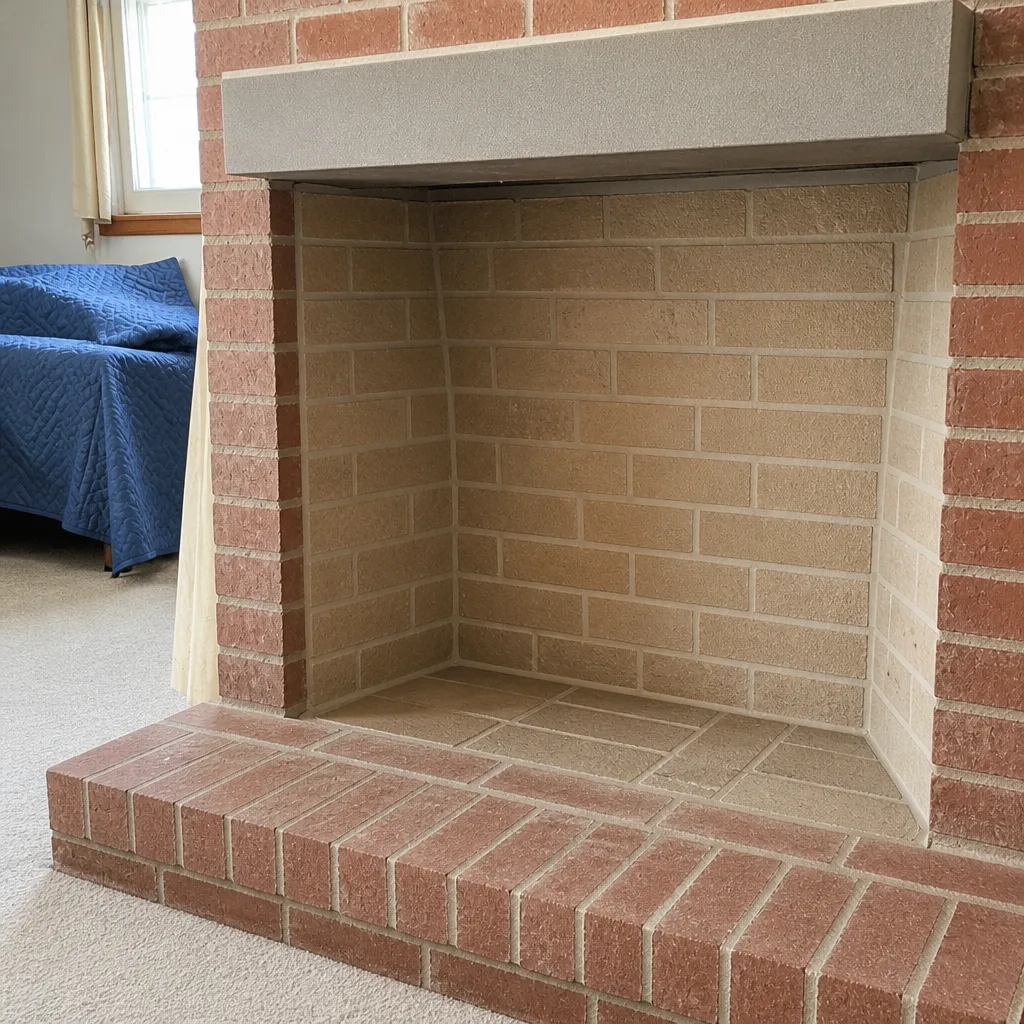 After
Common Mistakes to Avoid
- Following sea-level cleaning schedules at 6,035 feet. The national advice about once-a-year cleaning assumes a combustion cycle that doesn’t happen here. A Colorado Springs burn season can deposit creosote faster – match your interval to how you actually burn.
- Treating a brush pass as a cleaning. A flue brush alone misses the smoke chamber, damper, and firebox, which is where deposits settle first. Ask what’s included before you book.
- Assuming a sweep-only crew can fix what they find. If the liner is compromised, a sweep-only operation will refer you out. Choose a company that can repair – the gap between findings and fix is where problems grow.
- Skipping a camera inspection after a full season. A visual-only look can’t see a cracked liner or a displaced flue tile. A Level 2 scan is the only way to see what a brush can’t reach.
- Ignoring the crown on a windy Front Range chimney. Wind cracking is one of the most common paths to masonry damage in this region. The crown is a cleaning-visit check, not a someday-upgrade.
- Burning wet or green pine. Pine and other softwoods are common fuel here, but wet wood burns colder and deposits more. Split and season your wood, and check density, not surface feel.
- Paying a crew without seeing the evidence. A cleaning you can’t verify is a bill without a result. Ask for camera footage and check the firebox yourself.
Frequently Asked Questions
There’s no single number that fits every home at 6,035 feet. Homes that burn pine-heavy loads through a full heating season typically need more frequent cleaning than a sea-level fireplace on the same schedule. Check the flue for a tar smell, glossy deposits, or soot flakes after every few cords. Once you notice any of these, it’s time for a cleaning and inspection. If you’re not sure, a camera scan tells you what’s inside the flue and gives you a clear baseline. Call (844) 560-6330 for an exact quote – estimates are free.
Yes, because less oxygen in the air means wood burns less completely, and incomplete combustion deposits creosote faster. At 6,035 feet, a Colorado Springs chimney can accumulate more deposit per cord than the same setup at sea level. That’s why we assess the flue lining and smoke chamber personally on every visit rather than following a national schedule. No two homes burn the same way, and elevation is a big reason why. Call (844) 560-6330 for an exact quote – estimates are free.
A cleaning removes deposits from the smoke path – firebox, damper, smoke chamber, flue, and cap. An inspection assesses the condition of what’s cleaned, at one of three defined levels. A cleaning without an inspection tells you the chimney is empty; an inspection tells you whether it’s still sound. Ideally both happen on the same visit, and with a full-service company they do. Call (844) 560-6330 for an exact quote – estimates are free.
You need a new liner when the camera shows one of a few specific conditions: a cracked or displaced flue tile, an unlined flue with no barrier between exhaust and the structure, or a flue sized wrong for your appliance. If none of those show up on camera, you don’t need a liner. Nothing should be recommended that you can’t see for yourself on the footage. A damaged flue gets relined with DuraFlex when the condition calls for it – and no sooner. Call (844) 560-6330 for an exact quote – estimates are free.
Creosote keeps building, and once it glazes, a standard flue brush can’t remove it. From there the risk is chimney fire – a real safety concern, not a scare tactic – and for wood-burning appliances, reduced draft that can allow carbon monoxide to back up into the home. If you’ve had a chimney fire, even a small one, the liner needs a camera scan before you burn again. The good news is that an inspection tells you exactly where you stand. Call (844) 560-6330 for an exact quote – estimates are free.
Usually not, because the aftermath is a repair question, not a cleaning question. A chimney fire can crack the flue liner, warp the damper, or damage the smoke chamber, and none of that is visible without a camera. A sweep-only operation cleans and refers; a full-service company inspects the damage and performs the repair – including HeatShield resurfacing or a DuraFlex reline where the flue wall or liner has been compromised. You’re best served by calling a company that can do both. Call (844) 560-6330 for an exact quote – estimates are free.
The Bottom Line
Chimney cleaning in Colorado Springs isn’t a generic maintenance task. It’s shaped by high-altitude combustion physics, a pine-heavy fuel load, and wind that stresses crowns and masonry all season. The right cleaning addresses the entire smoke path – firebox, damper, smoke chamber, flue, and cap – and pairs with a camera inspection that shows you what’s inside your flue. If something is wrong with the liner or the flue wall, repair-capable work using DuraFlex and HeatShield is the difference between a patch and a permanent fix. If everything checks out, nothing gets added that you can’t see on camera. For homeowners and property managers using their fireplace regularly, that’s peak-standard chimney care.
To schedule a cleaning, inspection, or a repair, call (844) 560-6330. We answer 24/7. Fast dispatch from 7am to 7pm, Sunday through Friday. Olympus Chimney Sweep offers free estimates and works with a professional product portfolio trusted by certified chimney technicians across the industry – so problems found during inspection are fixed on the same visit. If you’d like to start with learning more about the Olympus Chimney Sweep approach, or you’re scheduling chimney repair, call (844) 560-6330 for a free estimate.
Written by the team at Olympus Chimney Sweep.