
Last updated November 16, 2026
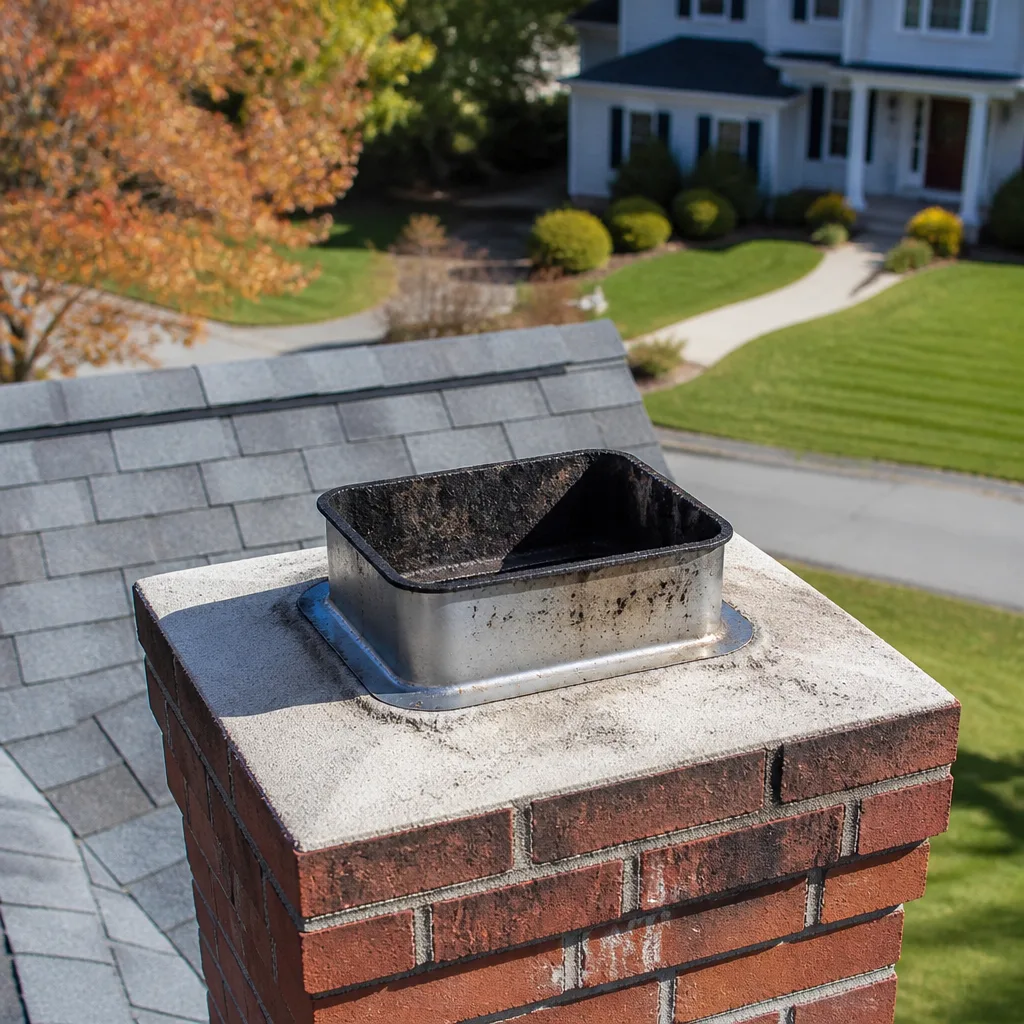 Sweep & inspection
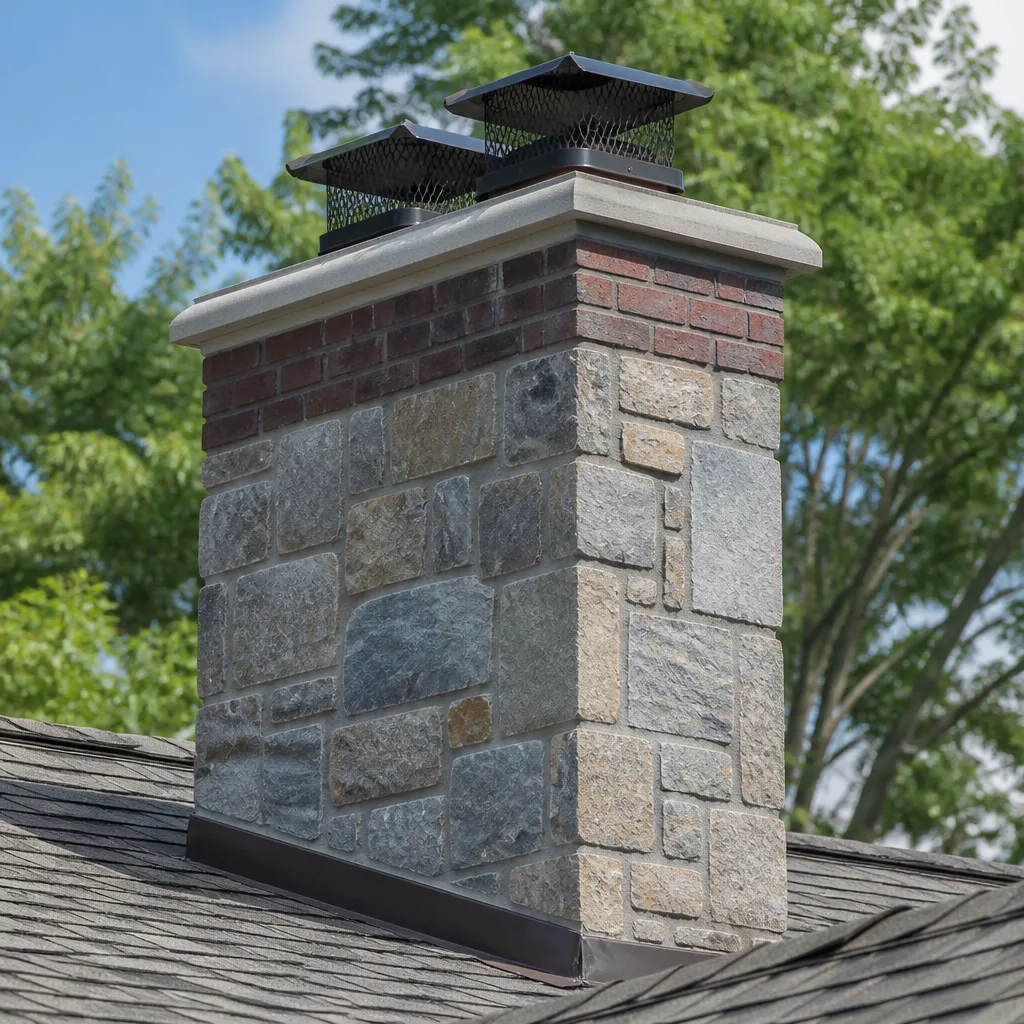 Caps & crowns
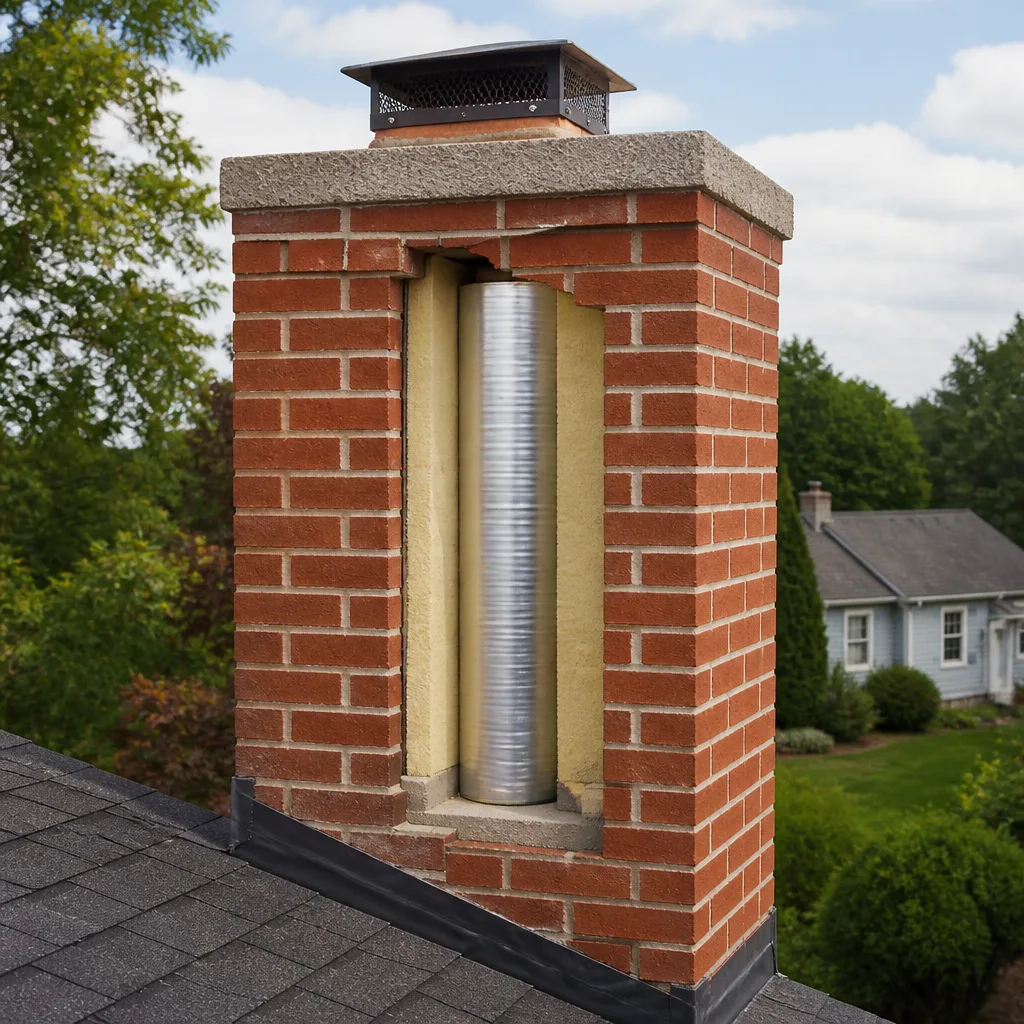 Flue relining
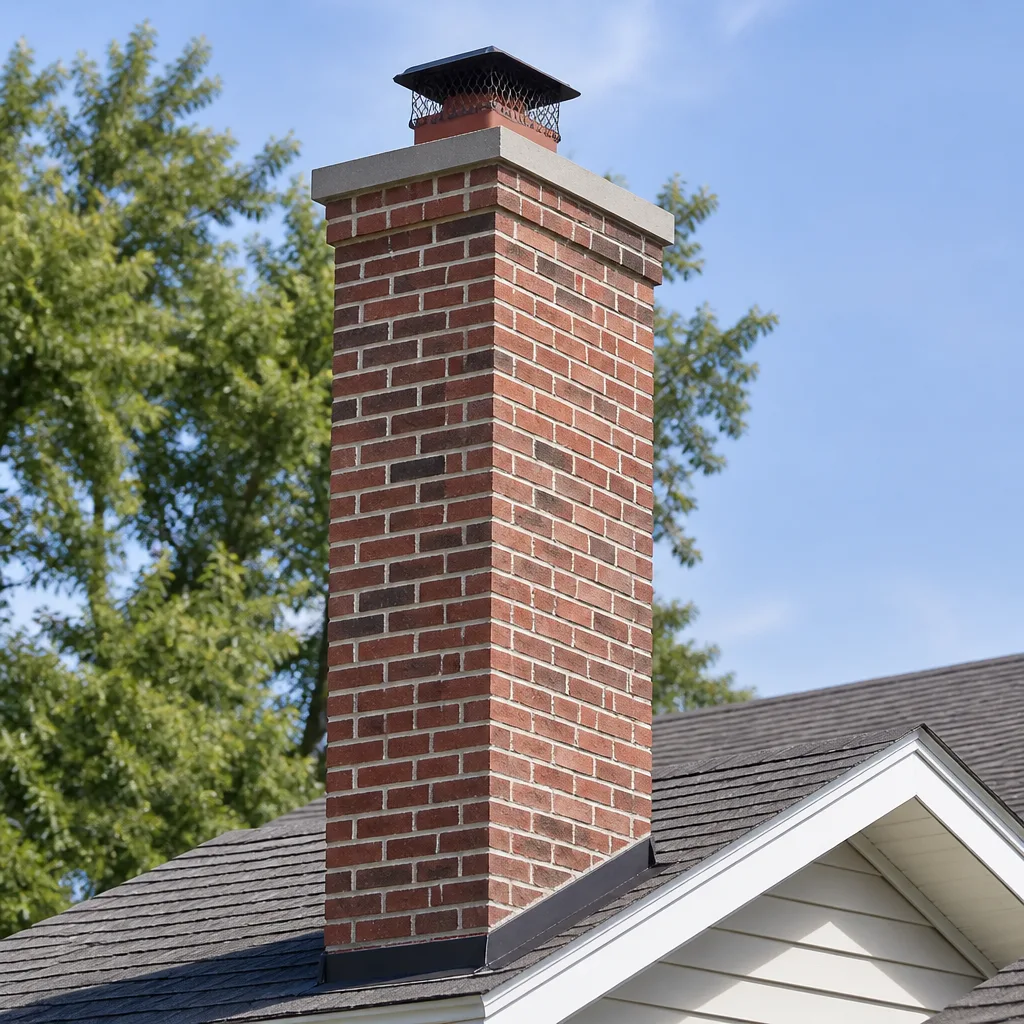 Masonry repair
 Gas fireplace service
Level 1 sweep and inspection to the NFPA 211 annual standard - flue, crown, cap, and flashing checked and photographed
Chimney sweep logs do not sweep chimneys. They loosen some creosote - which then falls where a brush and vacuum still have to collect it.
Chimney Sweep Maintenance Checklist for Colorado Springs Homeowners
The damper is the most inspected chimney component we see and the most commonly deferred repair. That surprises people. It’s a flap of metal the homeowner can see with their own eyes, so they know it’s warped or rusted, and they still put it off because it looks cosmetic. It isn’t. A damper that won’t seal lets warm room air escape up the flue all winter, and it stops doing its job as a safety barrier once it’s jammed open or corroded into place. What follows is a checklist built like a professional pre-inspection, one that ties each item to a failure point we actually come across in Colorado Springs homes.
Quick Answer
A chimney maintenance checklist for a Colorado Springs home covers seven checkable components: firebox floor, smoke shelf, damper plate, flue liner, crown, flashing, and cap. You can safely inspect the firebox, damper, and cap from the ground yourself. The flue liner, smoke shelf, and crown underside need tool access and trained eyes. Log every finding with a date, and stop using the fireplace immediately if you find cracked masonry, a loose or missing cap, visible flue gaps, or heavy creosote buildup.
Styles & brands we work with
- Sweep & inspection
- Caps & crowns
- Flue relining
- Masonry repair
- Gas fireplace service
Table of Contents
- Why a Colorado Springs Chimney Checklist Is Different
- The Component-by-Component Checklist
- What You Can Safely Check Yourself vs. What Needs a Technician
- Colorado-Specific Failure Points: Hail, Freeze-Thaw, and Storm Debris
- How to Log and Date Your Findings
- Red-Flag Conditions vs. Conditions You Can Monitor
- How Often to Sweep and Inspect in Colorado Springs
- Common Mistakes to Avoid
Why a Colorado Springs Chimney Checklist Is Different
A checklist written for a humid climate doesn’t fit a Colorado Springs home, and copying one off the internet is how maintenance gets skipped. The failure modes here are driven by three local forces: wide daily temperature swings that stress masonry, hail that batters anything above the roofline, and high winds that drive debris into places a homeowner never thinks to look. Add the altitude and dry air, and the way a chimney ages in Colorado Springs is genuinely its own thing.
Start with freeze-thaw. Masonry is porous, and when moisture works into a mortar joint or a hairline crack in the crown, a cold night freezes it and a warm afternoon thaws it. That cycle repeats dozens of times across a Colorado Springs winter. Each freeze expands the water and each thaw lets it retreat, and the crack widens a little every time. By the time a homeowner notices a spalled brick face or a flaky mortar joint, the damage has usually been progressing for a few seasons. This is the single biggest reason a visual check in fall catches more than a spring one.
The second force is hail. Colorado Springs sits right in a corridor that produces some of the more aggressive hail in the state, and the chimney is the highest, most exposed masonry on the house. A cap takes the hit first. A crown takes it next. Copperfield and Gelco caps and crowns are built to survive that, but no cap survives a direct strike forever without showing dents, loosened fasteners, or a crack that lets water in from above rather than wicking it up from below.
The third is wind. Storms here drive pine needles, grit, and small debris across the roof and down any flue that’s missing a proper cap or has one that’s been loosened by hail. A partially blocked flue doesn’t always announce itself. It shows up as a fireplace that smokes more than it used to, or a draft that feels weak on a still day. That’s a finding worth logging, because it’s easy to blame on “the weather” and defer for years.
The point of mapping a checklist to these specific forces is simple: nothing gets deferred that shouldn’t be. A generic to-do list lets you check a box and move on. A checklist built around how Colorado Springs homes actually fail keeps you looking at the parts that break here.
The Component-by-Component Checklist
Work from the firebox up and from the roof down, and check each item in the order below. This mirrors how our technicians approach a diagnostic inspection, and it’s a sequence you can follow at home for the items that don’t need tools. We don’t just look during an inspection. We assess structural integrity and venting performance, and that standard applies to what you check too.
Firebox floor. Look for cracked or missing firebrick, and for mortar joints that have gone soft or dropped out. A cracked firebrick is a path for heat and moisture to reach the structure behind it. Feel the surface for loose grit. Also check that the ash pit door, if your firebox has one, still seats fully.
Smoke shelf. This is the flat ledge just above the damper, at the back of the firebox. It’s where creosote and debris collect, and it’s the spot most homeowners never see. If you can get a light and a mirror to it, look for a build-up of soot and grit that has bridged the shelf. A blocked smoke shelf is a common cause of a fireplace that back-drafts.
Damper plate. Open and close it. It should move freely, seat flat when closed, and show no warping, heavy rust, or corrosion along the hinge or the frame. A plate that won’t close flat is letting air and heat up the flue every hour the fireplace is cold. A plate stuck open or corroded into place is the deferred repair we see most often in Colorado Springs, and it matters for more than efficiency.
Flue liner. From the firebox, look up the flue with a light. You’re not inspecting the full run, but you should be able to see whether the liner is continuous, whether there are gaps or breaks at the joints, and whether the flue surface looks glazed, shiny, or heavily coated. Glazed creosote is a sign of a hot, oxygen-starved fire and a sign the flue is overdue for service.
Crown. The crown is the concrete cap at the very top of the chimney that sheds water away from the masonry. Check it from the ground with binoculars or from a ladder only if you’re fully comfortable on a roof. Look for cracks, separation from the flue tile, and any spot where water could pool rather than run off.
Flashing. This is the metal that seals the chimney where it meets the roof. Look for lifted, rusted, or missing sections and for roof sealant that has cracked. A flashing leak sends water down inside the chimney chase, not onto your ceiling, so it’s easy to miss until the masonry is already wet.
Cap. The cap covers the top of the flue and keeps rain, hail, birds, and wind-driven debris out. Check that it’s secure, that the screen or mesh is intact, and that no fasteners look loosened. A damaged or missing cap is the open door for everything the wind carries.
What You Can Safely Check Yourself vs. What Needs a Technician
Most of a chimney checklist is safe to run through yourself as a look-and-log exercise, and a handful of items genuinely need a trained technician with tool access. Knowing the line is what keeps a homeowner check from turning into a hazard. Here’s the split, stated plainly.
- Safe for you: firebox floor (cracked firebrick, soft mortar), damper plate movement and seating, cap condition seen from the ground with binoculars, crown from the ground, flashing from the ground, and any change in draft or smoke behavior.
- Needs a technician: the full flue liner run (requires a camera and a full-length view), the smoke shelf when access is tight, the underside of the crown and the top of the flue tile, the condition of the flue tile joints, and the actual creosote thickness inside the flue.
- Never attempt yourself: anything that requires opening the chimney structure, any work on a steep roof without proper fall protection, and any attempt to clear a blocked flue with a tool or a household object. A blocked or damaged flue can hold flammable creosote, and the wrong move inside it can cause a fire.
The flue liner is the item that fans out the difference most. From the firebox, you can see the bottom of the liner, but you cannot see whether a joint four feet up has opened or whether the lining behind a bend is intact. That’s why camera inspection exists. When a technician runs a camera down the flue, you get a view of the entire run and a photo report of what was found. That report is the difference between a guess and evidence.
The crown and flashing are the other items that benefit from trained eyes, because a hairline crack from the ground looks like nothing and from two feet away looks like the start of a wet-masonry problem. If you’re not comfortable on the roof, don’t go up to satisfy the checklist. Stay on the ground and let the inspection cover it.
Where a technician finds damage during a sweep, the fix should happen on the same call. A compromised liner identified during inspection and relined with DuraFlex is one visit, not a sweep today and a separate repair next month. Full-service scope means no referral gaps, and it means a problem isn’t left sitting between appointments. For a service that covers cleaning, inspection, and repair in one company, the checklist and the repair happen in the same conversation.
Colorado-Specific Failure Points: Hail, Freeze-Thaw, and Storm Debris
A checklist that ignores hail, freeze-thaw, and wind-driven debris isn’t a Colorado Springs checklist. These three are the failure triggers that show up here and rarely make it onto a generic guide. Each has a specific place on the component list above, and each has a tell you can learn to spot.
Hail damage indicators on caps and crowns
Hail strikes the cap and crown before it strikes anything else on the house. On the cap, look for dents, bent louvers, and fasteners that have been driven loose or pulled out. On the crown, look for new chips at the edge and for crack lines that radiate from a strike point. A cap that looks beaten but intact may still have shifted enough to admit water at its seal. That’s the finding most often deferred, because the cap still covers the flue and the homeowner assumes “covering” means “working.”
Freeze-thaw crack patterns in masonry
Freeze-thaw damage has a signature. It shows up as cracks that follow mortar joints rather than cutting across brick faces, and it shows up as spalling at the corners and edges, where moisture collects. A crack that runs in a stair-step pattern along the mortar lines is the classic freeze-thaw tell. If you see it, log the location and the date, and have it assessed before the next winter. Moisture that has already entered masonry is the setup for another season of widening.
Wind-driven debris in the flue
After a strong storm, a cap with a compromised screen lets pine needles, grit, and small debris into the flue. The sign is usually a change in how the fireplace burns rather than something you can see. Watch for smoke that curls into the room instead of rising, a fire that’s harder to light, or a draft that feels weaker than it did last season. A flue with debris in it needs to be cleared before you burn again, and this is not something to reach into or work out yourself.
These three local forces are why a Colorado Springs home benefits from a fall inspection rather than a spring one. The freeze-thaw season is ahead of you, not behind, and any crack from the previous winter is still there and will take on more water before the next freeze. Getting eyes on the structure before heating season starts is how you keep a small crack from becoming a masonry job.
How to Log and Date Your Findings
A checklist with no record is just a walk around the chimney. The record is what makes the checklist function, because it lets you see progression over time and it gives you something concrete if you ever need it. A dated maintenance log matters for insurance claims and it matters at a home sale, where a buyer will ask about the chimney and a dated record is a stronger answer than a memory.
You don’t need a formal system. A notebook kept near the fireplace or a spreadsheet works, and the shape of the entry is simple:
- Date and the season (for example, “early fall” or “after the June storm”).
- Which component you looked at, in the checklist order above.
- What you saw, in plain language (“crown crack along the west mortar joint, about a finger wide”).
- What you did about it (“logged, scheduled inspection” or “monitored, nothing changed”).
- Any photo or video you took, saved with the same date.
The progression is what tells the story. A hairline crown crack logged once and never looked at again is a guess. The same crack logged at the same size two years running is a known, stable condition. The same crack logged wider each fall is a problem that’s underway and needs to be addressed before it reaches the chase. When a technician inspects, that same record and the photo report from the sweep sit together, and the homeowner can see the whole history in one place.
For home sales, the record answers the question a buyer’s inspector will ask. A dated log plus the technician’s photo report from the most recent inspection is straightforward to hand over, and it shows the chimney was maintained rather than ignored. For insurance, a record of when a condition was first logged and what was done about it is what lets a claim be evaluated on the facts. Neither works if the findings only lived in someone’s head.
One more habit that helps: log the draft behavior, not just the structural items. “Fireplace smoked on a cold morning” with a date is a data point. Three of those logged across a winter is a pattern worth talking to a technician about, even if every component on the list looked fine.
Red-Flag Conditions vs. Conditions You Can Monitor
Not every finding is urgent, and treating every finding as urgent is its own kind of mistake. The useful distinction is between a condition that should stop fireplace use today and a condition that can be monitored until the next scheduled service. Here’s where we draw the line.
Stop using the fireplace and call for service immediately if you find any of these:
- Cracked or missing firebrick, or mortar joints that have gone soft or dropped out of the firebox.
- A flue liner with visible gaps, breaks, or separated joints, or any liner material that looks deteriorated.
- A cap that is loose, missing, or has a screen that no longer contains the flue opening.
- A crown that has separated from the flue tile, or a crack running through the full thickness of the crown.
- Flashing that has lifted completely away from the chimney or shows an open path for water.
- Heavy or glazed creosote visible in the flue, or a strong creosote smell in the room.
- Any sign of smoke backing into the room, a persistent damper that no longer opens or closes, or a carbon monoxide alarm that has gone off.
Conditions that can be monitored until the next scheduled service:
- A hairline crown crack that has been logged and isn’t growing.
- A damper plate that’s stiff but still seats flat when closed.
- Light surface soot in the firebox that isn’t heavy or glazed.
- A cap with cosmetic dents that is still firmly fastened and covering the flue.
- Flashing with intact metal and no lifted or separated sections.
The reason the distinction matters is that a deferred item is not the same as a monitored item. A monitored item has been seen, logged, and set for a review date. A deferred item has been seen and ignored. The red-flag list isn’t a scare tactic; it’s a line drawn at the point where a condition can become a fire risk or a carbon monoxide path. Creosote in a compromised flue, or a flue with gaps that lets combustion gases into the chase instead of up and out, is where that risk lives. Once the condition is on the red-flag list, the fireplace stays cold until a technician has assessed it.
How Often to Sweep and Inspect in Colorado Springs
A fireplace that gets used regularly should be swept and inspected once a year, and the fall is the natural time to schedule it in Colorado Springs because it puts eyes on the structure before freeze-thaw season and heating season both arrive. A fireplace that sees heavy use, or burns unseasoned wood, may need more frequent attention. The right cadence is based on what the flue shows, not a fixed number that ignores how much you burn.
Creosote is the reason a sweep isn’t cosmetic. It’s the residue of incomplete combustion, and it builds up on the flue walls whether the fire is burning well or not. A small amount is normal. A heavy or glazed layer is a fire hazard, and it’s not something a homeowner can remove safely. A chimney sweep removes it with the right tools and a vacuum, and the inspection that comes with a sweep tells you what condition the flue is in after the creosote is gone.
The components in the checklist above fall into a natural rhythm. Firebox and damper checks are quick enough to do every fall. Cap, crown, and flashing checks belong on the roof-access visit, which is why they’re covered in the annual inspection. The flue liner check belongs on the camera inspection, and it fits the same annual visit. A single booked sweep with an inspection covers the whole list, and a repair found during that visit can be handled on the same call.
Homeowners in Colorado Springs who heat with wood or use the fireplace as a primary heat source should be honest about the cadence. A fireplace used most evenings across a winter builds creosote faster than one used a few times a month. If you can’t remember the last time the flue was swept, that’s the signal to book rather than to guess. For a professional look at the full run, a chimney sweep with an inspection covers the checklist in one visit. Where the inspection turns up a damaged flue or crumbling crown, the fix is a chimney repair planned around what the camera showed, not a guess.
Common Mistakes to Avoid
- Treating the damper as cosmetic. A damper that won’t seal is letting heat escape all winter and can leave the flue open when it shouldn’t be. Log the seating and the movement every fall, and don’t put the repair off because the plate still moves.
- Skipping the fall inspection because the spring looked fine. Freeze-thaw damage in Colorado Springs progresses through the winter, so a fall look catches what a spring check can’t. If you only inspect once a year, make it the fall.
- Reaching into the flue to clear debris. Wind-driven debris in a flue should be cleared by a technician with the right tools. Reaching in can push debris further down or disturb creosote in a way that’s dangerous.
- Ignoring hail marks on the cap and crown. Dents and new chips are the start of a water path. A cap that still covers the flue isn’t necessarily doing its job if a fastener has loosened or the seal has shifted.
- Logging findings in your head instead of on paper. A crack you remember is a guess. A crack you logged with a date and a photo is a record, and the record is what matters at a home sale or an insurance claim.
- Burning green or unseasoned wood to “use up” a woodpile. Unseasoned wood produces more creosote than dry wood and builds the flue layer faster. If the flue was just cleaned, the wood you burn next matters.
- Assuming a missing cap is fine because the flue looks clear from the firebox. A missing cap is an open door for rain, hail, birds, and wind-driven debris. Treat it as a repair to schedule, not a condition to monitor.
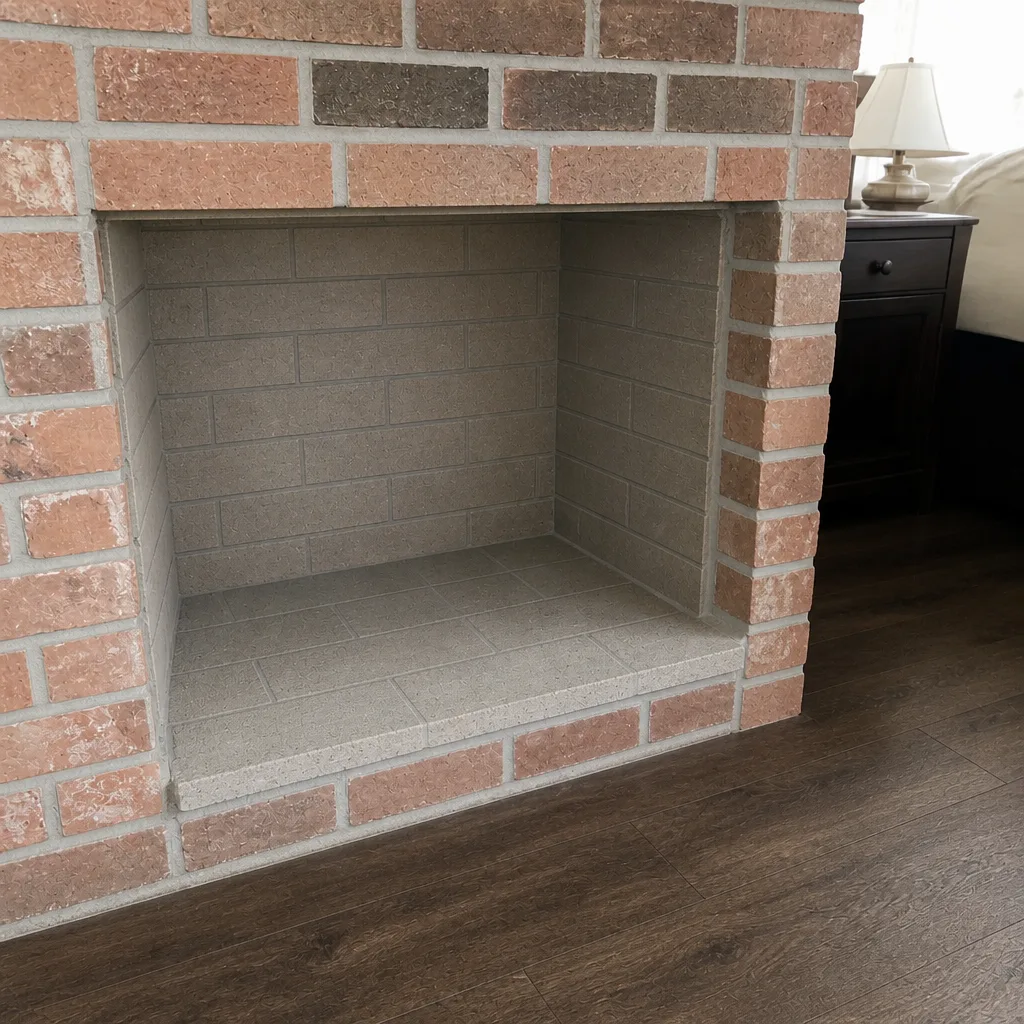
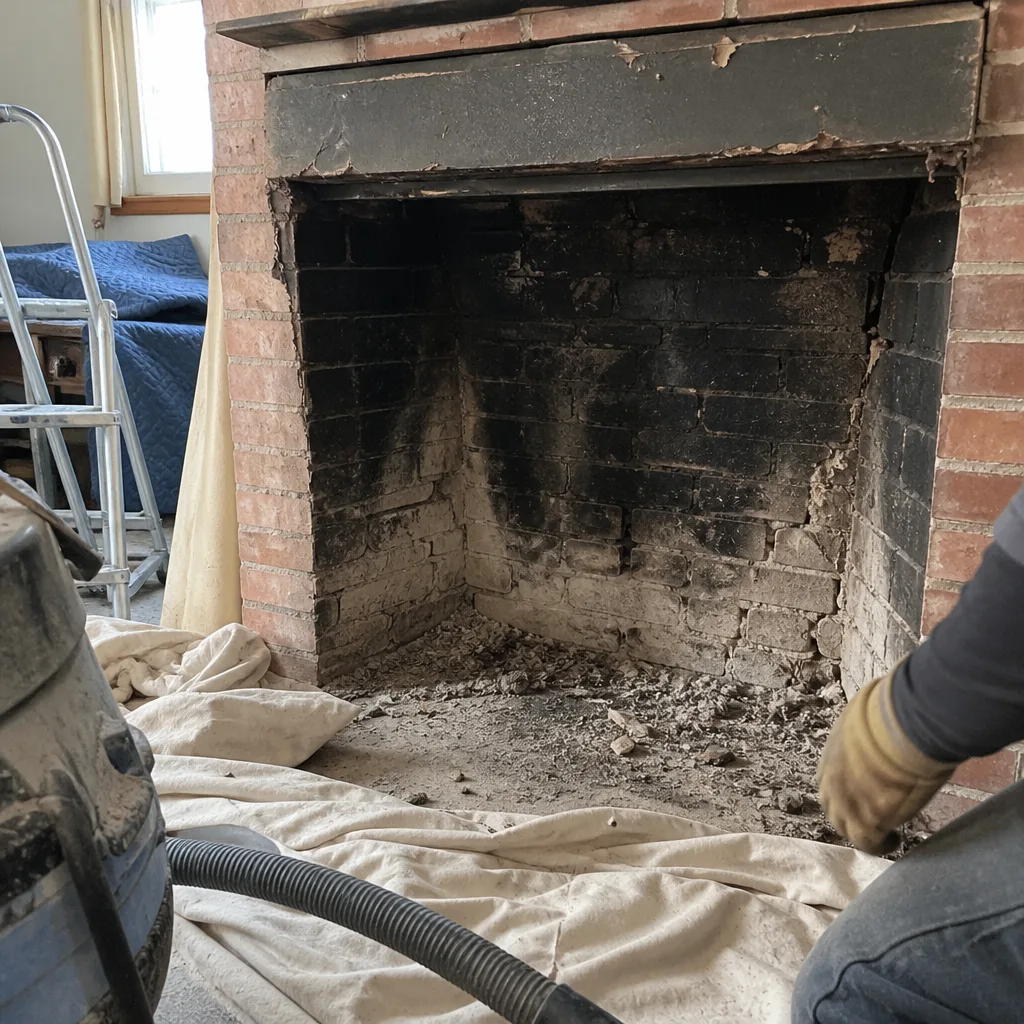
See the difference
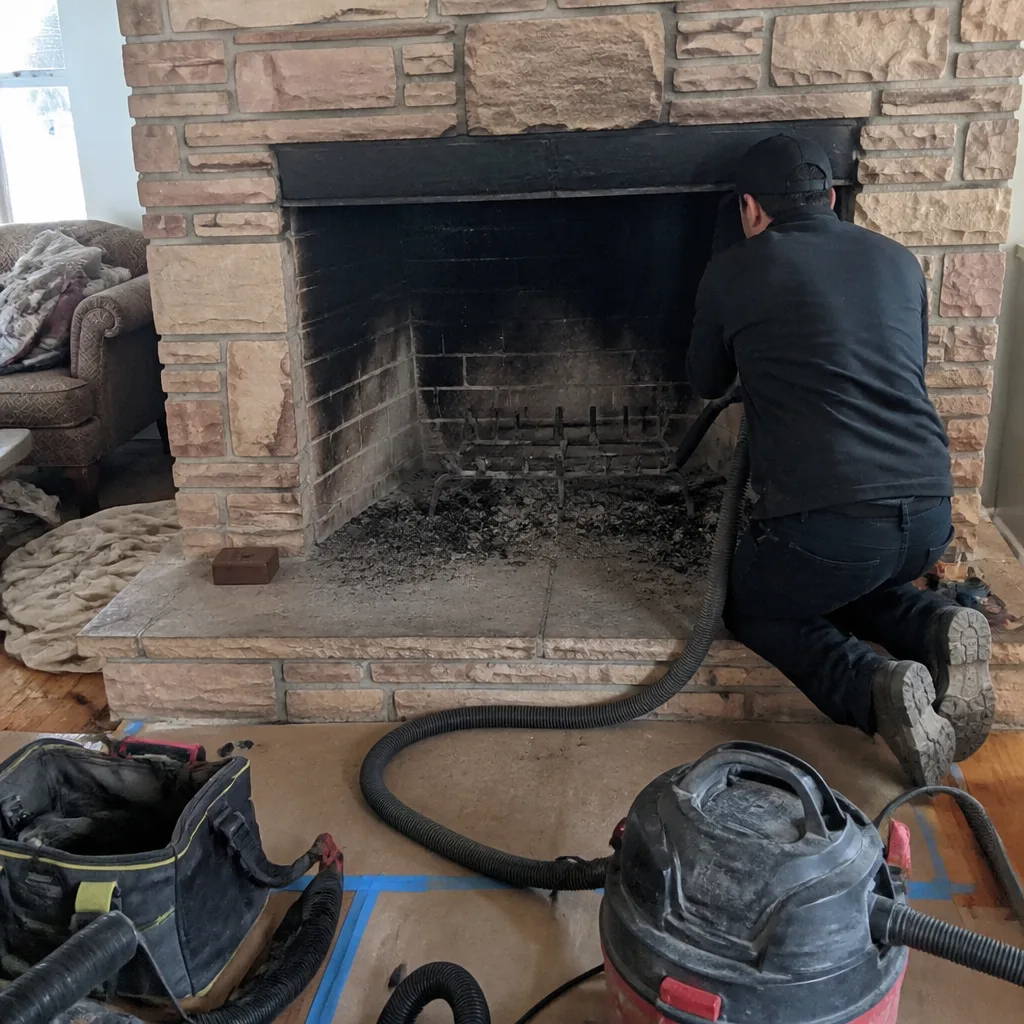 Before
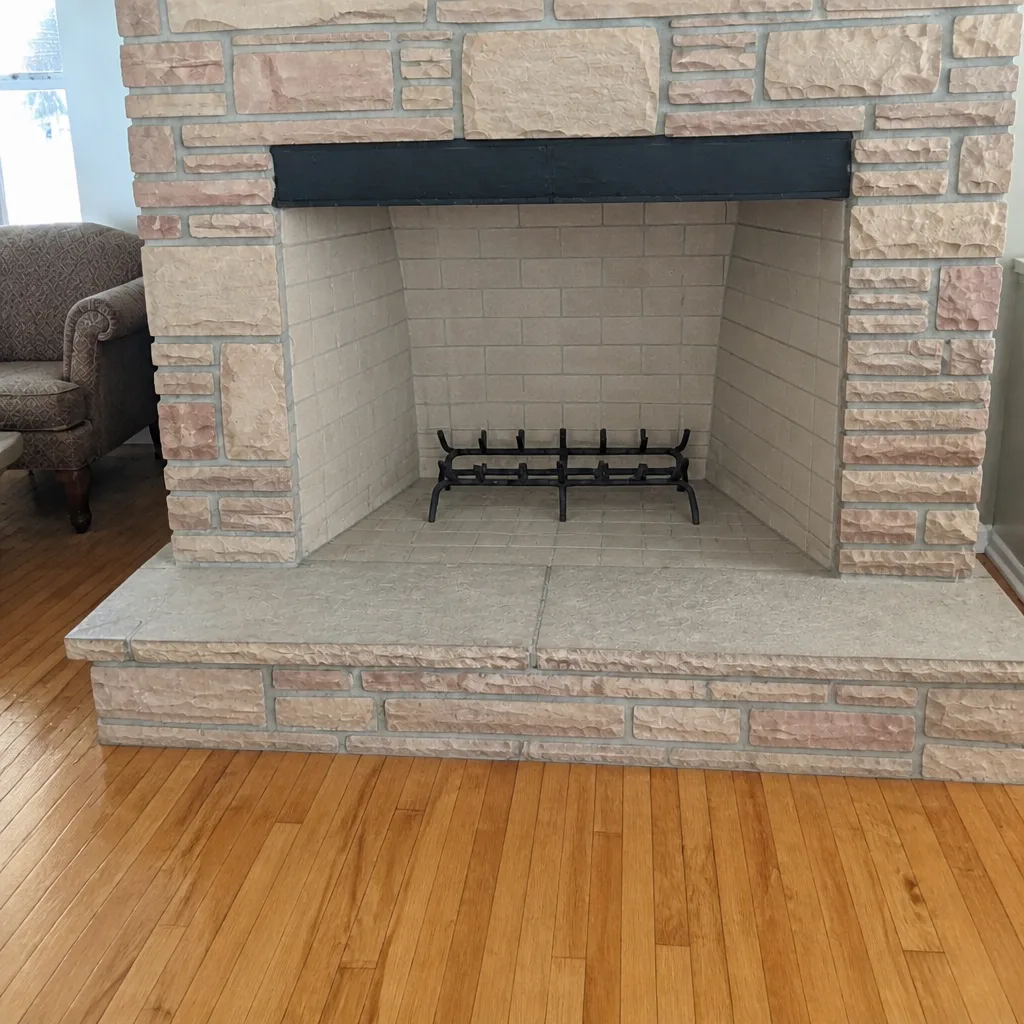 After
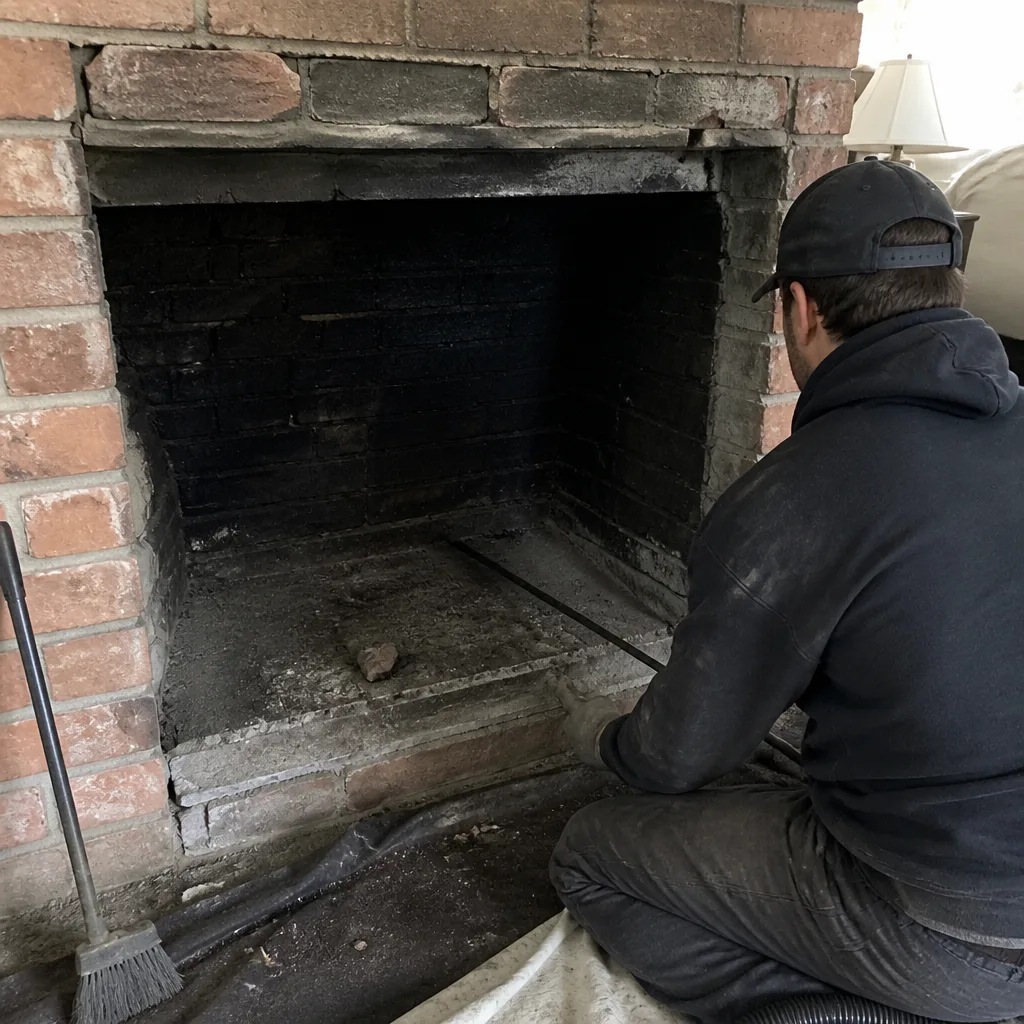 Before
 After
 Before
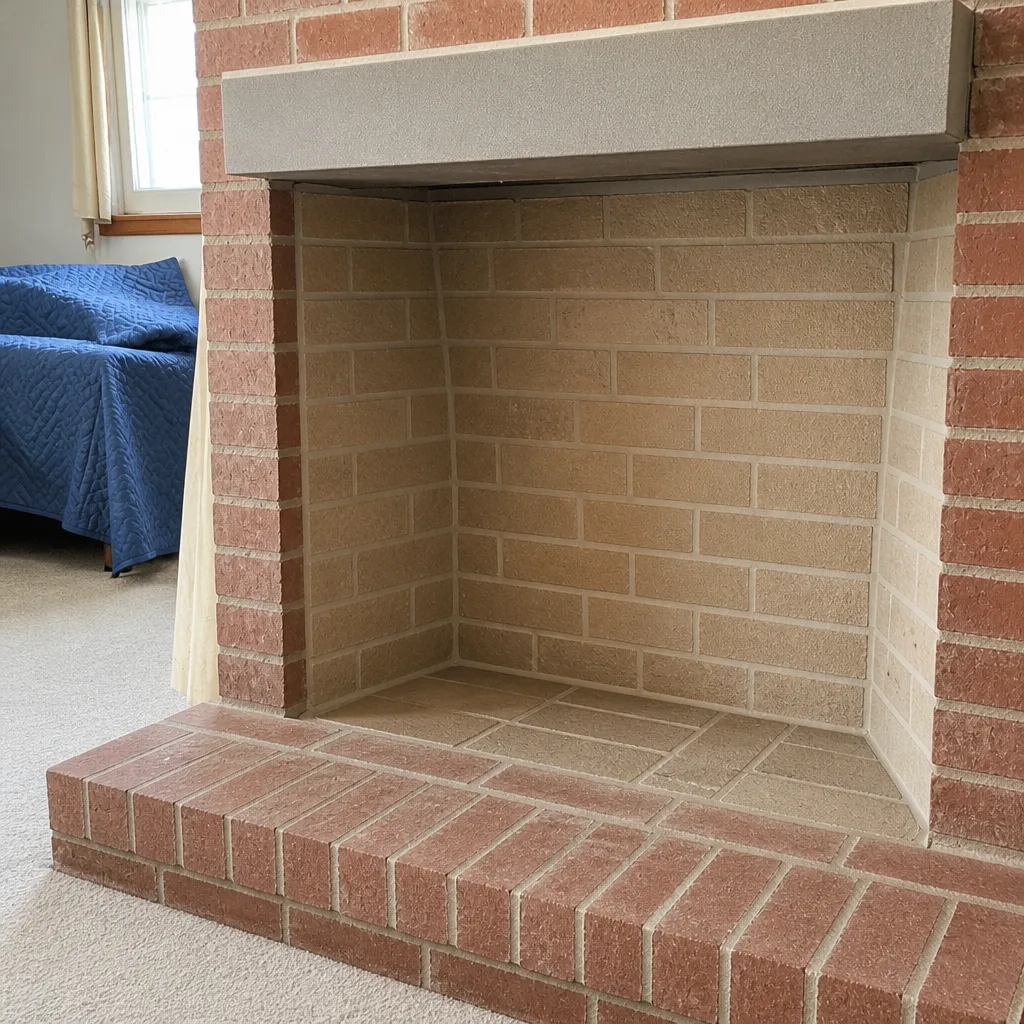 After
When to Call a Professional
Call a professional when any item from the red-flag list above turns up, when you can’t see the full flue liner, or when the annual fall inspection is simply due. Call sooner if you see smoke backing into the room, smell creosote strongly in the house, or a carbon monoxide alarm has gone off in the home. Those are the moments to stop using the fireplace and have a technician assess it rather than wait for the scheduled visit. A technician with camera access can tell you exactly what the flue looks like and show you a photo report of what was found. Where the inspection turns up a damaged or undersized flue, the fix can move to installation of a DuraFlex liner rather than a referral to a second contractor. Where the flue surface is deteriorated but structurally sound, HeatShield resurfacing is a restoration option that most sweep-only services can’t offer. Olympus Chimney Sweep offers free estimates in Colorado Springs – call (844) 560-6330. We answer 24/7. Fast dispatch from 7am to 7pm, Sunday through Friday.
Frequently Asked Questions
A chimney sweep in Colorado Springs is priced per job by a written estimate, and the estimate is free. The price depends on what the visit covers: a standard sweep and inspection, versus a sweep that adds a camera inspection of the full flue, versus a repair found during the inspection. Ask for the quote in writing before booking, and ask what the estimate includes – a sweep and an inspection should be itemized. Call (844) 560-6330 for an exact quote – estimates are free.
Only if the liner is damaged, discontinuous, or undersized for the appliance, and the only way to know is a camera inspection of the full run. A liner that looks intact at the firebox can still have separated joints higher up. When the inspection finds a compromised liner, relining with DuraFlex is the permanent fix rather than a patch. Nothing is recommended without camera evidence you can see for yourself. Call (844) 560-6330 to book an inspection – estimates are free.
A fireplace used regularly should be swept and inspected once a year, ideally in the fall before heating season. Heavy use or burning unseasoned wood can push the cadence higher, and the flue condition from the last inspection is the better guide than a fixed number. If you can’t remember the last sweep, book one. Call (844) 560-6330 – estimates are free.
Skipped maintenance lets creosote build up and lets small structural findings become repairs. A crown crack that goes unlogged takes on water through freeze-thaw and widens, a deferred damper keeps letting heat up the flue, and a compromised liner becomes a path for combustion gases. The point of the checklist is to catch these while they’re still small. Call (844) 560-6330 to book a fall sweep and inspection – estimates are free.
You can safely check the firebox floor, the damper, and the cap and crown from the ground, and log what you find. The full flue liner, the flue tile joints, and the creosote thickness inside the flue need a camera and trained eyes. Don’t go on a steep roof without fall protection and don’t reach into the flue yourself. Call (844) 560-6330 to schedule the parts of the checklist that need a technician – estimates are free.
A professional chimney inspection covers the full assembly, including the crown, flashing, and cap, and it produces a photo report of what was found. The cap and crown are the first parts hail strikes, and they’re easy to misread from the ground. A camera inspection of the flue plus a roof-level check covers the full checklist. Call (844) 560-6330 for a free estimate on a sweep and inspection in Colorado Springs.
The Bottom Line
A chimney checklist is only useful if it’s built for the place the house sits. In Colorado Springs, that means a list mapped to freeze-thaw, hail, and wind-driven debris, with the seven components checked in order and every finding logged with a date. You can safely run the firebox, damper, and ground-level cap and crown checks yourself; the flue liner, flue tile joints, and creosote thickness need a technician and a camera. Treat the red-flag list as a hard stop and the monitor list as a scheduled review, and book the fall sweep and inspection so the parts you can’t check are covered before heating season. When a repair turns up, full-service scope means it’s found during inspection and fixed on the same call. For the full range of services across Colorado Springs, start with Olympus Chimney Sweep and a free estimate.
Call (844) 560-6330 for a free estimate. We answer 24/7. Fast dispatch from 7am to 7pm, Sunday through Friday. Our technicians have up to 13 years of experience, and we work with industry-respected product lines including DuraFlex, HeatShield, and Copperfield for the repairs a full inspection turns up.
Written by the team at Olympus Chimney Sweep.